Selected work

What I have
built.

  • Neuro

    • A second you. It learns how you think, decide and write from your own answers, and then does your work in your voice while you are busy with something else.
    • You never write documentation again. You answer its questions, and the know-how you could never put into words ends up on record, in your own words.
    • It grows up in front of you. Infant, Child, Apprentice, Expert, Superhuman, and you watch your own brain light up as a map of nodes on the way there.
    • Plug your brain into the others and it starts learning from everyone. What a colleague worked out yesterday, yours knows today, without anyone being asked. You decide per item what leaves your own brain, and your private notes never do.
    • It cannot make things up. Every claim carries a click straight through to the exact source it came from, and when the brain holds nothing on your question it says so.
    Drafts
    in your voice, from the way you have already written
    Reminds
    you of what you no longer remember, and brings it back when it matters
    Runs
    your workflows and the routine jobs nobody wants
  • Radical AI

    • Two sides to the company I co-founded: it places senior AI people, and it makes companies AI-capable with the staff they already have, through a readiness scan and a capability sprint.
    • I built every tool it runs on: the CRM, the CMS, the public website, the admin portal and the candidate portal.
    • The matching reads a CV and then looks past it, scoring people on adaptability, personality, awareness and connection.
    • Every point of a score can be accounted for, so a recruiter can overrule it and does.
    5
    tools I built: the CRM, the CMS, the website, the admin portal, the candidate portal
    3 mnd
    from nothing to a running business
    50+
    candidates in the pool
  • Servicepaspoort

    • I designed and built servicepaspoort.nl, a senior-care brand in Zuid-Kennemerland: the page architecture, the sections, the contact flow, the webshop, and the brand voice its copy is written in.
    • I advise the director on the digital strategy and run the marketing: a deliberate choice to aim at Haarlem, Heemstede, Bloemendaal and Zandvoort and let reach outside the region drop, a monthly report from Analytics and Search Console in plain Dutch, and a full SEO and GEO audit with a 50-blog calendar behind it.
    • First full month after launch: Google clicks up 248 percent, impressions up 317 percent, a 16.4 percent click-through rate.
    • And the writing tool that fills it: it works only from 1,400 paragraphs I vetted against Dutch health authorities, holds every factual sentence against the page it came from, and stops when fewer than three sources cover a subject.
    +248%
    Google clicks, first full month
    1.400
    vetted sources it may quote
    May 2026
    live, built and designed by me
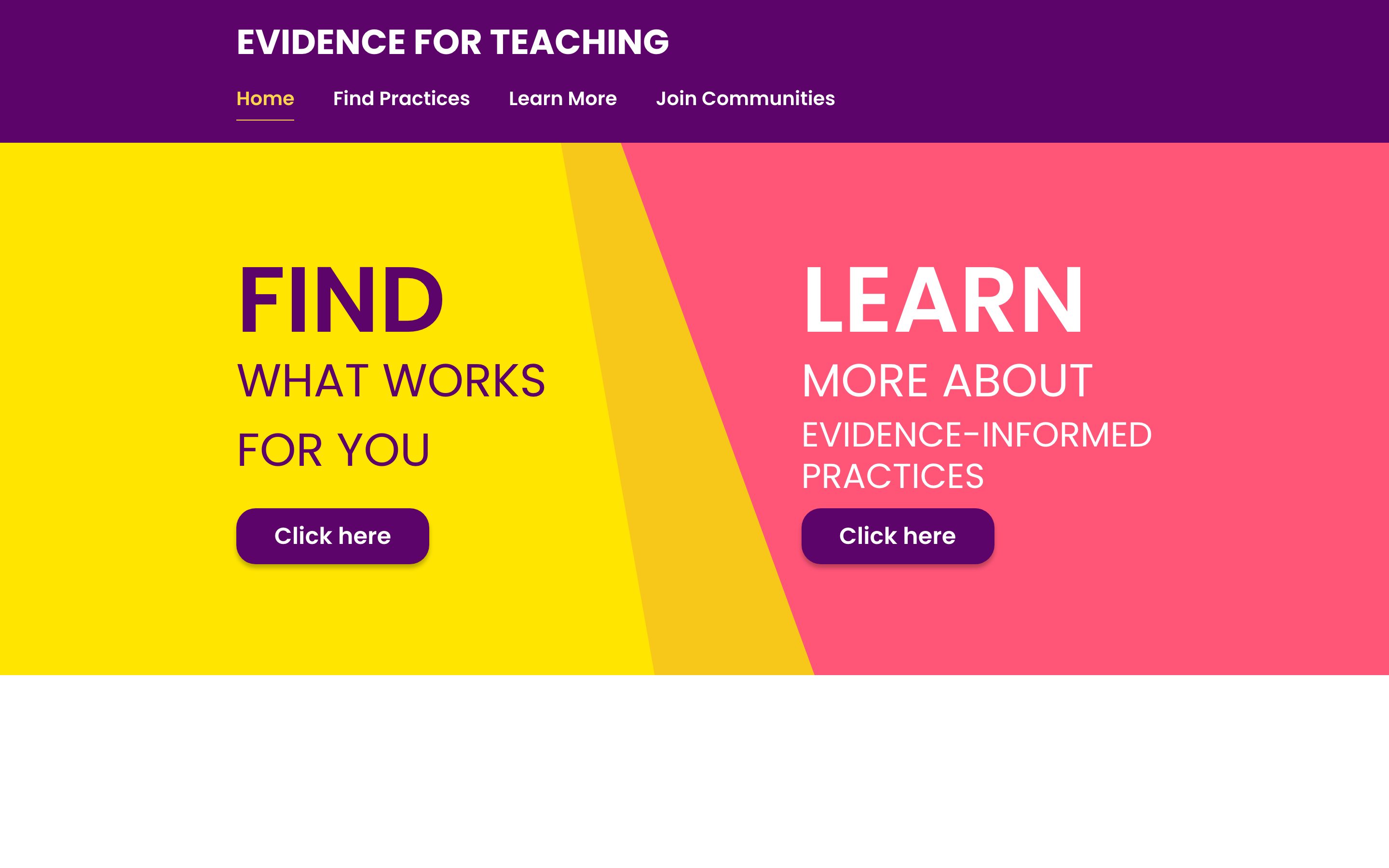
  • EIPSI · Evidence for Teaching

    • EIPSI stands for Evidence-Informed Practices for School Inclusion, an EU Erasmus+ programme piloted in ten high-complexity schools per country: classes with many immigrant pupils, many children with special needs, pupils moving in and out, and poor socio-economic backgrounds.
    • The research turned up the real problem. A teacher searching the web gets results nobody has vetted or ranked, loses time, and falls back on guesswork. So we reframed the brief into one question: how do you get a teacher to reach for a proven method?
    • The answer was two kits. A digital hub for teachers who are online, and a printed kit that needs no internet after you download it: a card game, an infographic explaining evidence-informed practice, materials for the school. Designing for both ends of the connectivity range was the call that made it work.
    • This ran as design thinking: it starts at a wicked problem instead of a brief, and it is not finished until something exists. I was the project lead for getting the products realised, on a team of six at Digital Society School, with the UX, the innovation and the consulting all sitting in that one job. The hub is live at evidenceforteaching.org, we showed it at the Showcase in June 2021, and my name is on the project page.
    €371.181
    EU Erasmus+ programme
    5
    countries it was built for
    10
    high-complexity schools per country
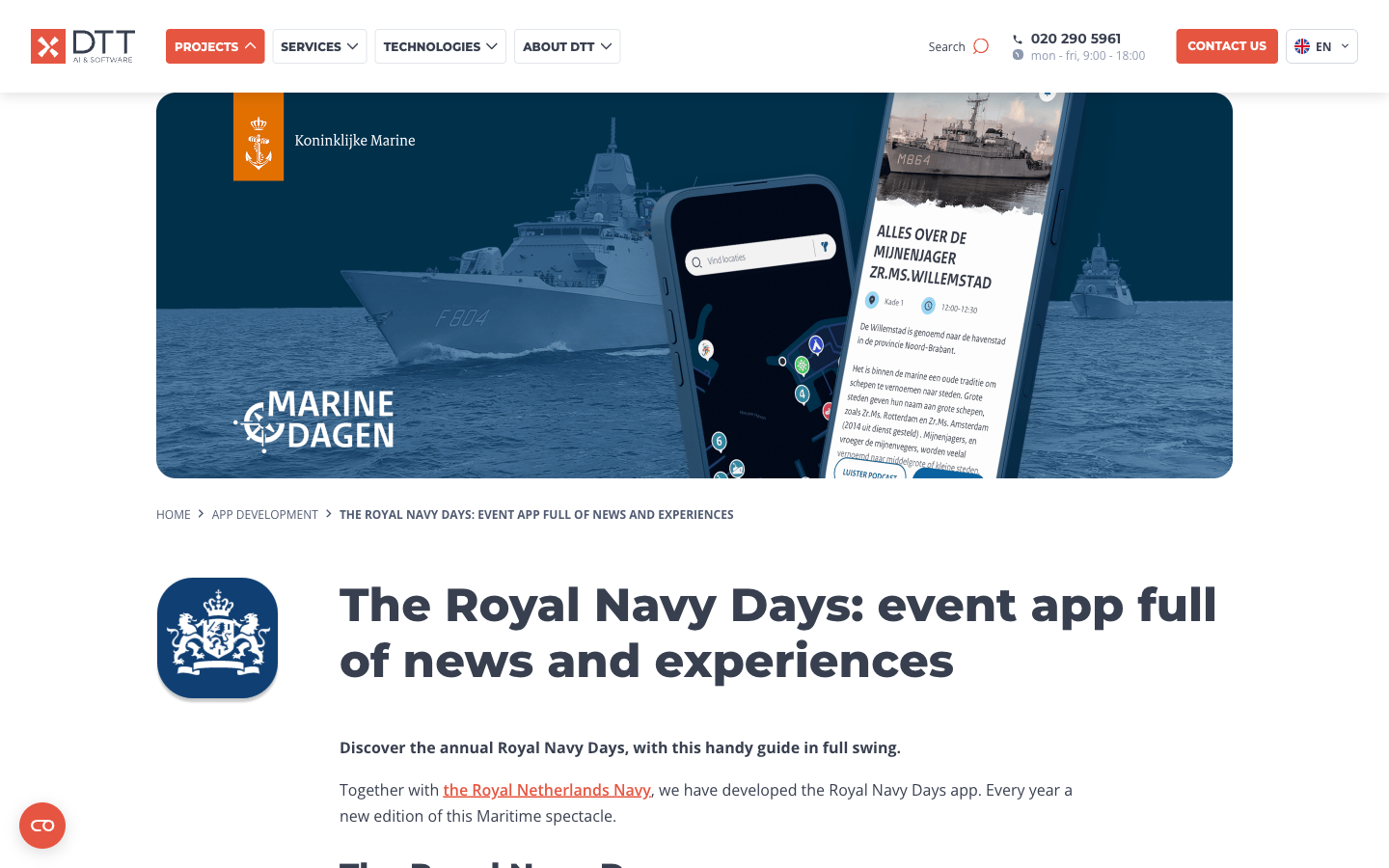
  • Koninklijke Marinedagen

    • The Navy's official Navy Days app: augmented reality of the fleet, a QR code on every ship, a live map of the terrain.
    • Their first public event in five years, on a date that could not move.
    • I ran the 15-person team at DTT that had it ready on the day.
    100.000
    visitors in two days
    15
    person team I led
    5
    star client rating from the Navy
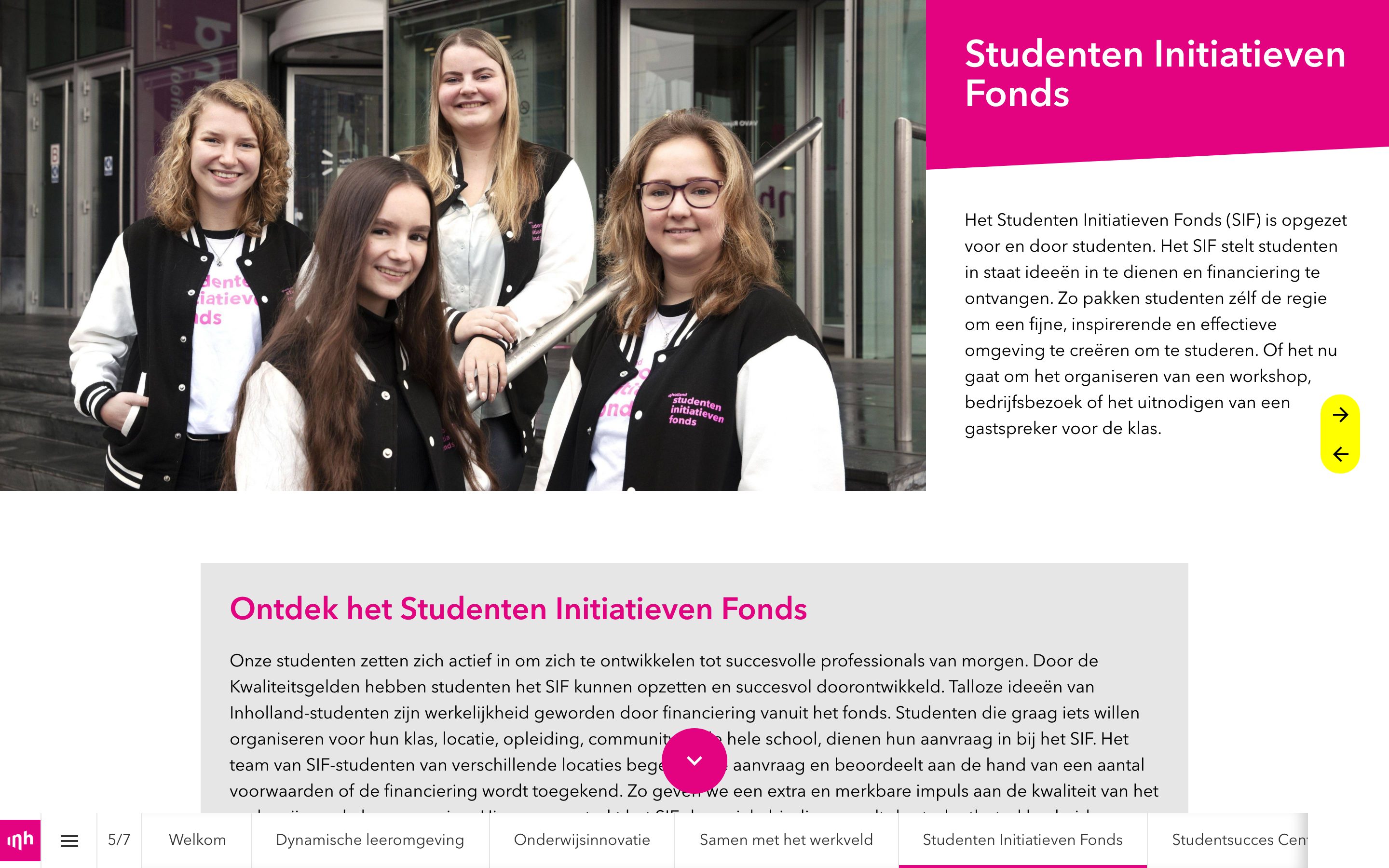
  • Inholland fund

    • A fund that pays for student initiatives, up to 10,000 euro each.
    • The money already existed. What was missing was a route a student could walk: apply, meet a supervisor within two weeks, get a decision.
    • It still runs today, with a student team I have not been part of for years.
    200+
    initiatives funded
    10.000
    euro per idea
    6 jaar
    on, still runs without me
  • Zorgbalans / FlexiCura
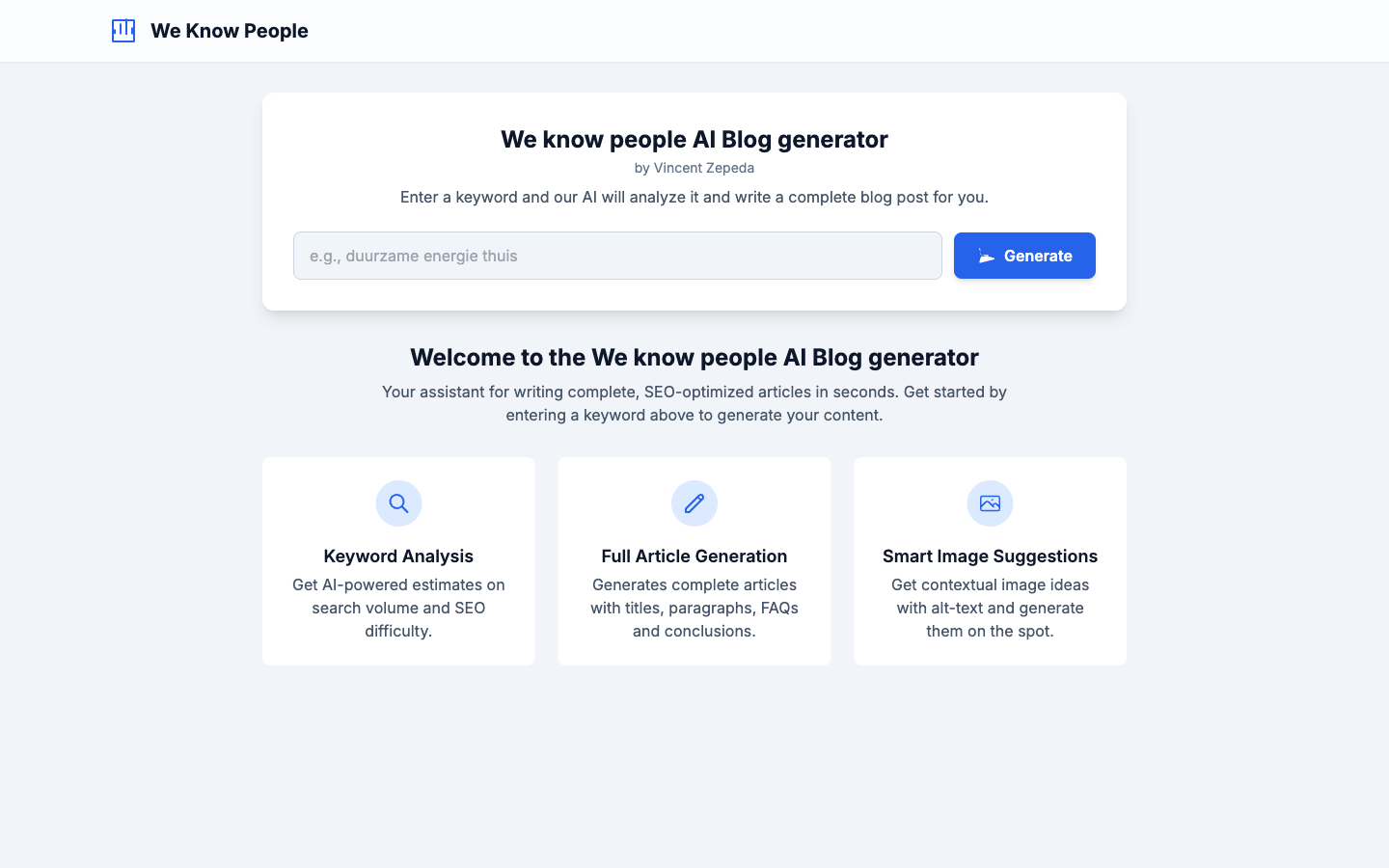
  • We Know People
  • Radical AI
  • DTT
  • Digital Society School
  • Inholland
  • FunAmsterdam
01 · 2026Flagship

Neuro

It is you, digitally. It does the manual work, so your hours go back to people.

What it is
You, digitally. A brain built out of your own answers that thinks and writes the way you do, does your manual work, and is built the way a real brain is built: nodes, links, and circuits that fire together per role.
Who it is for
Anyone whose real know-how lives in their own head, and the companies that lose all of it the day that person walks out.
What I did
Founded it and lead it: the creative direction, the brand, the category, and where the AI and the product go next.
What came of it
In use, and it grows on screen: value points per thing it learns, five stages from Infant to Superhuman, a health score. Every answer traceable to its exact source, sealed per company by security I broke into myself until nothing leaked.

Founder. I lead the creative direction, the AI and the product.

Next.js 15SupabasePostgreSQL + RLSTypeScriptVercelMCP integrations

Neuro is a digital brain, built the way a brain is built. Every answer a person gives becomes a node. Nodes link to each other with typed edges, and clusters of them form circuits that fire together, so the role you have decides which part of the brain lights up: a marketer and a salesperson typing the same words get different context. You can see the thing, a map of dots you hover, zoom and open. It gets raised by conversation: you answer its questions and what you only knew by feel is captured in your own words, and the brain earns points for every real thing it learns and grows through five stages, Infant, Child, Apprentice, Expert, Superhuman. Your own brain stays private. What you choose to share feeds the company's shared brain, which is there to answer what no single person can. And it acts as well as remembers: it reads the mail, the calendar, the CRM and Notion, drafts in your voice, sends the weekly update, runs the routine work, and shows the exact source behind every claim it makes.

  • The brain is a graph: every answer is a node, nodes link with typed edges, and circuits of them fire together, so retrieval is role-aware by construction
  • You can watch it. My Neuro is a live map of your own brain you hover, zoom and open, so the thing people are building is visible instead of hidden in a database
  • It gets raised by conversation: answering its questions captures the know-how someone only had by instinct, in their own words, and every real thing it learns earns points
  • It grows through five stages, Infant, Child, Apprentice, Expert, Superhuman, with a health score, so a company can see how much of what it knows is actually captured
  • Brains can be linked. Once yours is connected it keeps learning on its own from the collective memory of the company, so what one person worked out reaches the rest without anyone being asked twice
  • The privacy guardrails are per item: you decide what feeds upward, private notes never surface in the shared brain, and every company is sealed off from every other one
  • The safety layer I built: verbatim source chunks, hybrid retrieval and a citation per claim you can click, so the factuality of an answer is checkable rather than assumed, and it says so when nothing in the brain covers the question
  • Every claim in an answer is traceable back to the exact source, with clickable citations, so it is trustworthy enough to act on
  • It remembers what people forget. Every memory keeps its own recall count and stays findable, so something you worked out months ago and can no longer bring back comes to you when it matters again
  • It acts as well as remembers: reads Gmail, calendar, CRM and Notion, drafts in your voice, runs conversational workflows and automations, sends the weekly update
  • Sealed per company by security I broke into myself until nothing leaked, and I wrote the brand book and set the category before a line of it existed
02 · 2026Flagship

Radical AI

An AI that scores people on who they are, not on what their CV says.

What it is
The technology behind Radical AI, a company with two sides: placing senior AI people, and making companies AI-capable themselves (readiness scan, capability sprint, strengthening the team they already have).
Who it is for
Companies that either hire senior AI people or want to build that capability in house, and the senior AI professionals in the Radical Network.
What I did
Built every tool the company runs on: the CRM, the CMS, the public website, the admin portal and the candidate portal, plus the matching and the scoring model and the security around all of it.
What came of it
Three months from nothing to a running business: 50+ candidates in the pool and placements made, with every rejection read by a person and every score explainable.

Head of Technology & co-founder

Next.js 15 / 16Supabase + pgvectorOpenAI / Gemini embeddingsAstro 6Vitest / PlaywrightVercel
radicalai.nl

Radical AI runs on two pillars: placing senior AI people (interim, permanent, executive search, selected on the APAC compass rather than a CV) and building AI capability inside a company that keeps its own staff (an AI Readiness Scan, a Capability Sprint on data and agents, team reinforcement), with the Radical Network as the community around it. The promise it sells is helping a company become the organisation it wants to be in three years. I lead the technology under both: a production platform where OpenAI embeddings and pgvector do the semantic matching, a proprietary seven-component engine scores candidates on four human dimensions, and a transparent gate decides who enters the pool, all behind a CI-enforced security suite.

  • Semantic matching: 768-dimension embeddings (OpenAI or Gemini, swappable behind one provider abstraction) plus pgvector cosine search in Postgres
  • The APAC engine: seven weighted components that sum to one, role-aware so the weights shift per detected role type, and every score explainable
  • De Poort: a learning-then-active gate that decides pool admission, with every rejection human-checked
  • Production security: row-level security on every table, a 57-assertion pentest regression set and an RLS verifier, all wired into a CI gate (lint, typecheck, security, build)
  • I lead the technology and set the direction for the AI: the matching, the data model, two apps, the public website and the security, with 165 automated tests in the CRM plus Playwright end to end
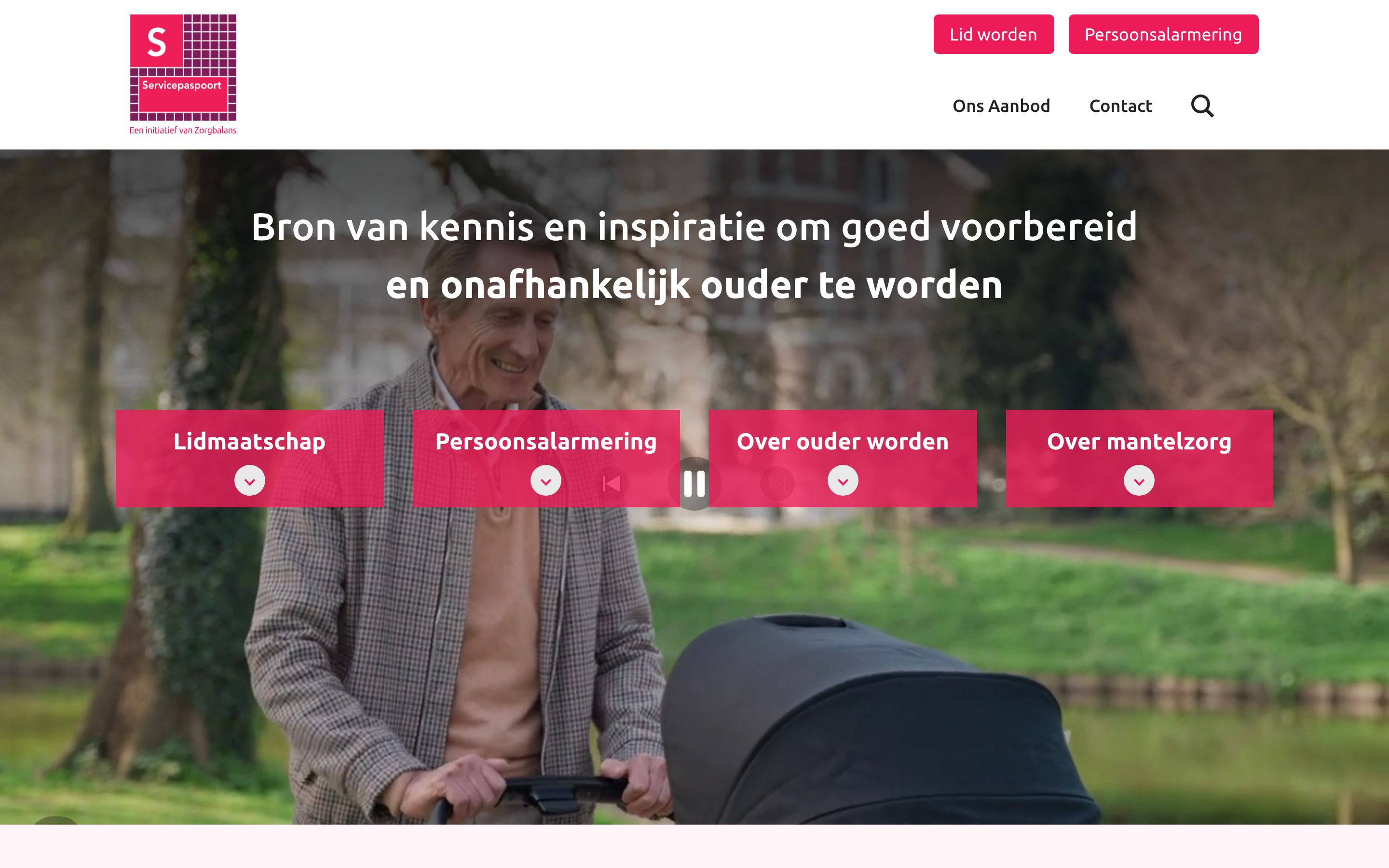
Servicepaspoort screenshot
03 · 2026Flagship

Servicepaspoort

I designed and built their website, I advise the director on where the brand goes online, and I built the engine that writes what appears on it.

What it is
The whole digital side of a senior-care brand: the website I designed and built, the strategy behind it, and the writing engine that fills it from vetted sources only.
Who it is for
Servicepaspoort, a senior-care membership brand in Zuid-Kennemerland, its director, and readers who act on what they read.
What I did
Designed and built the site, wrote the brand voice and the content strategy, run the digital marketing and the monthly reporting, advise the director on digital and SEO/GEO strategy, and built the writing engine.
What came of it
Live at servicepaspoort.nl since May 2026. First full month after launch: Google clicks up 248 percent, impressions up 317 percent, a 16.4 percent click-through rate. Every factual sentence traces back to one of 1,400 vetted sources, or it does not get published. Handed over end of September.

Digital Transformation Specialist

Website + CMSNext.js 16React 19Supabase (FTS + pgvector)RAGAnthropic / OpenAI / Google / Groq

I led the digital transformation at Servicepaspoort, a Dutch senior-care brand. I built their new website, the live servicepaspoort.nl, with its content architecture and a writing system tuned for an older audience, and the guardrailed, RAG-based AI engine that fills it, built around one hard client rule: the AI may invent nothing.

  • Designed and built the new servicepaspoort.nl end to end, from the design itself to the page architecture (a news bento grid plus a five-theme content carousel), the sections (Ons aanbod, Club Vitaal, Nobilis, member stories), the contact flow and the webshop
  • Advise the director on the digital and online strategy, and run the marketing myself: a deliberate geographic focus on Zuid-Kennemerland (Haarlem, Heemstede, Bloemendaal, Zandvoort) with reach outside the region allowed to drop on purpose, and email as the number one channel ahead of organic search
  • Report monthly to non-technical colleagues from Google Analytics and Search Console, in plain Dutch, keeping findability and on-site behaviour strictly separate. First full month after launch: clicks up 248 percent, impressions up 317 percent, a 16.4 percent click-through rate
  • Ran a full SEO, GEO and technical audit of the site (including the damage from the WordPress to Craft migration) and rebuilt the content programme into a 50-blog calendar chosen on real search demand instead of instinct
  • Authored its brand voice and content strategy: a babyboomer audience model and a copywriting style guide (aspirational, quality-led, regie and empowerment, never patronising), applying Deloitte 'show, do not tell' UX so emotional connection turns into membership
  • Mandatory retrieval, not open generation: a curated Postgres library of around 450 source URLs in roughly 1,400 paragraph chunks across 31 Dutch care topics, vetted against around 28 official Dutch health authorities
  • A six-layer safety architecture, most of it deterministic code: input guard, regex citation validator, AI fact-checker, live source-verifier, output guard, and strict retrieval that refuses if fewer than three sources match
  • Every factual sentence is auto-checked for a citation to an exact source page; the output guard masks dosing, hedges reader-directed diagnoses, and redirects treatment advice before export
  • A multi-provider LLM layer with streaming fallback across Gemini 2.5 Flash, Claude Sonnet 4, Groq (Llama 3.3 70B) and DeepSeek, so a provider failure switches instead of dead-streaming
  • A 100-point GEO/SEO/AEO scoring engine and a human-on-the-loop reviewer panel, on Next.js 16 and React 19
Inholland Student Initiative Fund screenshot
04 · 2020Flagship

Inholland Student Initiative Fund

I founded a 10,000 euro per idea student fund. 200+ initiatives later, it still runs without me.

What it is
A fund that pays for student ideas, up to 10,000 euro each: a short film, a study trip, a robotics build, a student radio station.
Who it is for
Inholland and its roughly 26,500 students. The budget for their ideas already existed. The route to it did not.
What I did
Founded it, designed how it works (apply, sit with a supervisor within two weeks, get a decision), and hired and trained the student team that runs it.
What came of it
200+ initiatives funded. Six years on it still runs, with a student team I have not been part of for years.

Founder & project leader

0 to 1Operating modelGovernanceBudget stewardship

I turned an institutional budget students could not reach into a student-run fund with a two-week path from idea to funding, then built the team and the operating model to keep it alive.

  • Founded and launched it in December 2020, designing the operating model, the application-to-decision process, and the first student-worker team
  • Up to 10,000 euro per idea, with a supervisor meeting within two weeks of applying
  • 200+ initiatives funded and counting, from short films and study trips to robotics builds and a student radio station
  • Still running in 2026 with around seven student employees and two staff coordinators, long after my own tenure
  • Done while chairing the Programme Committee and as the sole student member of the Advisory Group for roughly 26,500 students
EIPSI / Evidence for Teaching screenshot
05 · 2021Flagship

EIPSI / Evidence for Teaching

A teacher looking for a method that works gets search results nobody has vetted. We built the place that fixes it, online and on paper.

What it is
EIPSI, Evidence-Informed Practices for School Inclusion: an open platform for teachers plus a printed kit that still works in a school with no usable internet, so a proven method is actually within reach.
Who it is for
Teachers, counsellors, inspectors and administrators in high-complexity schools: many immigrant pupils, many children with special needs, pupils moving in and out, poor socio-economic backgrounds. Ten such schools per partner country.
What I did
Project lead for getting the products realised. The UX, the innovation and the consulting all sat in that one job: research into how these teachers look for methods, cutting a wicked problem down to one design question, prototyping, testing, and delivering the two kits.
What came of it
Two kits shipped. The hub is live at evidenceforteaching.org, the printed kit works without a connection, we presented it at the Digital Society School Showcase in June 2021 and at an EIPSI event later that year, and my name is publicly on the project.

Project lead for realising the products, Digital Society School

Design thinkingUX / UIPrototypingFigma

EIPSI stands for Evidence-Informed Practices for School Inclusion, a 371,181 euro EU Erasmus+ programme across five countries, piloted in ten high-complexity schools per country. Our research found the real blocker: a teacher hunting for a method gets web results nobody has vetted, loses time, and goes on instinct instead. So the six of us at Digital Society School cut it down to one question, how do you get a teacher to reach for proven practice, and then kept going until it existed: two kits, the EIPSI Hub for teachers who are online and a printed kit that keeps working when the connection does not. I led getting those products realised, and the UX, the innovation and the consulting were all part of that.

  • My name is publicly on the project: an EU Erasmus+ programme of 371,181 euro (project 2020-1-ES01-KA201-082328) across five countries, coordinated by the Universitat Autonoma de Barcelona
  • Design thinking as it is supposed to work: start at a wicked problem instead of a brief, cut it down to one sharp question (how might we get teachers to use evidence-informed research to overcome inequality in their own classroom), and keep going through research, ideation, prototyping and user testing until something exists
  • Co-built the EIPSI Hub (evidenceforteaching.org), the project's open digital platform, around three jobs: explain what evidence-informed practice is, make proven practices findable instead of buried in unvetted search results, and connect teacher communities to each other
  • Out of that came an offline-first printed kit (a card game, an infographic and school materials) for schools with poor connectivity, the call that made the whole thing usable where it was needed
  • Tied to the UN goals of Quality Education and Reduced Inequalities, with a clear equity mission

The rest of the constellation

Every star here was earned.

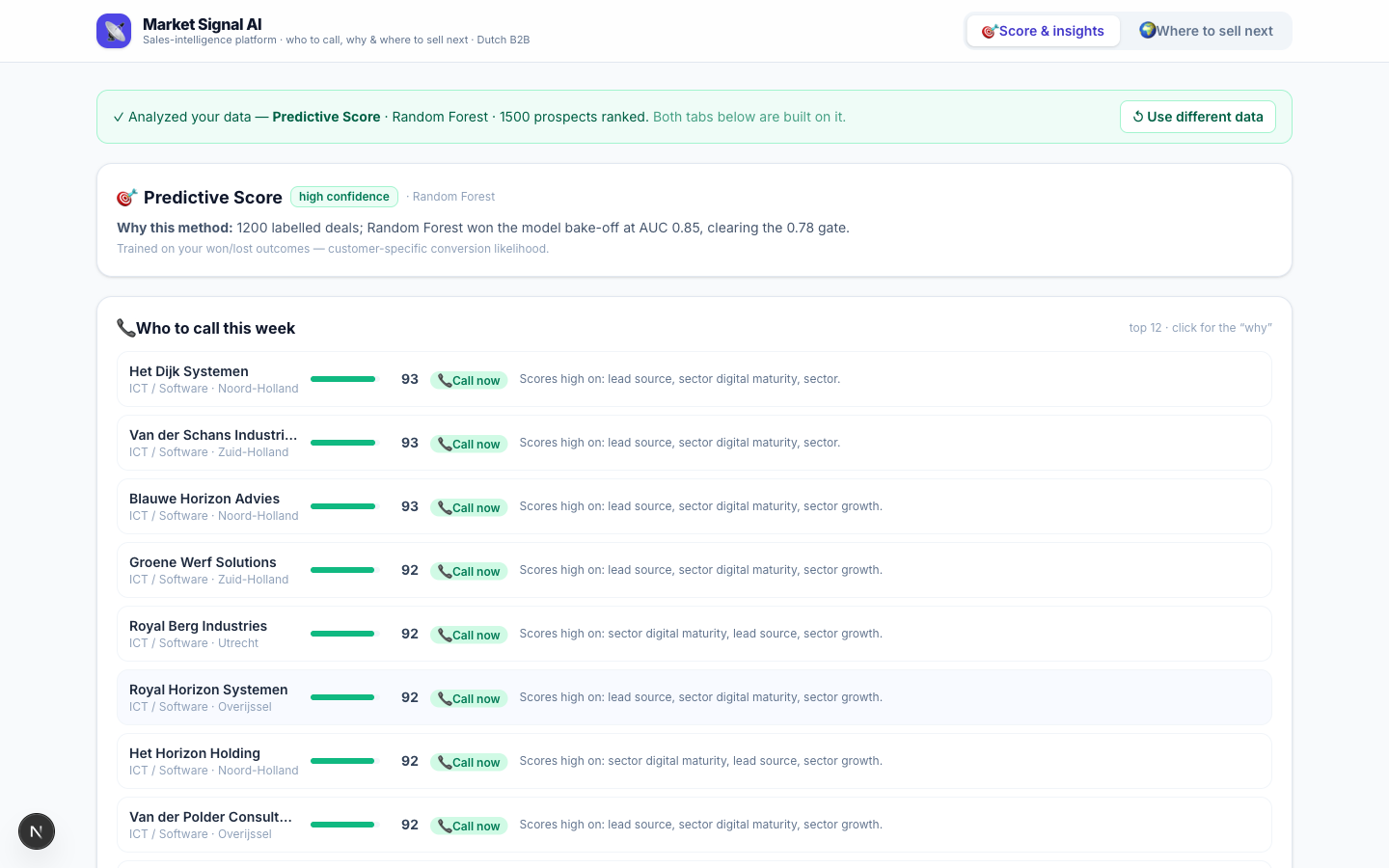
Market Signal AI screenshot
2026

Market Signal AI

Founder & lead

The model that knows when to shut up.

What it is
It does the work of an entire data science team: it works out which companies to approach next, and it says so when the data cannot carry an answer.
Who it is for
Companies that want data science without having a data team of their own.
What I did
Founded it and led it: the engine that learns from your CRM, the one that reads open market data, the model contest between them, and the gate that makes it refuse.
What came of it
Validated on real third-party data. AUC 0.93 and 0.80 where signal exists, and a correct refusal at 0.51 where it does not.
The full story

A machine-learning platform that makes data science accessible to any company, not only enterprises with their own data teams. It learns from a company's CRM to find lookalike customers and scans Dutch open market data to surface untapped sectors and regions, runs its own model contest, calibrates the winner so the probabilities are real, explains every score, and refuses to predict when a held-out AUC gate proves the data has no signal.

  • Two-way intelligence: an inside-out engine that learns from your CRM to find lookalike customers, and an outside-in engine that ranks Dutch sectors and regions from free public data (CBS, KVK, OpenStreetMap, TenderNed)
  • An auto model bake-off across LightGBM, RandomForest, CatBoost and a stacking ensemble, chosen on cross-validated top-decile precision with no human in the loop
  • A 0.78 to 0.97 AUC honesty gate plus a supervised to lookalike to market-signal fallback ladder, so weak data is never dressed up as a prediction
  • Probability calibration (auto isotonic versus sigmoid by Brier score) and per-lead SHAP explanations in plain Dutch and English
  • Validated on real third-party data: AUC 0.93 and 0.80 where signal exists, and a correct refusal at 0.51 where it does not, the product's whole thesis made true
  • Scores companies, sectors and regions, never individual people, a deliberate EU AI Act positioning that keeps it broad and safe to sell across industries
Pythonscikit-learn / LightGBM / CatBoostSHAPDutch open data (CBS / KVK)FastAPI
0
models in the bake-off
AUC .0
where signal is real
0-mode
honesty fallback ladder
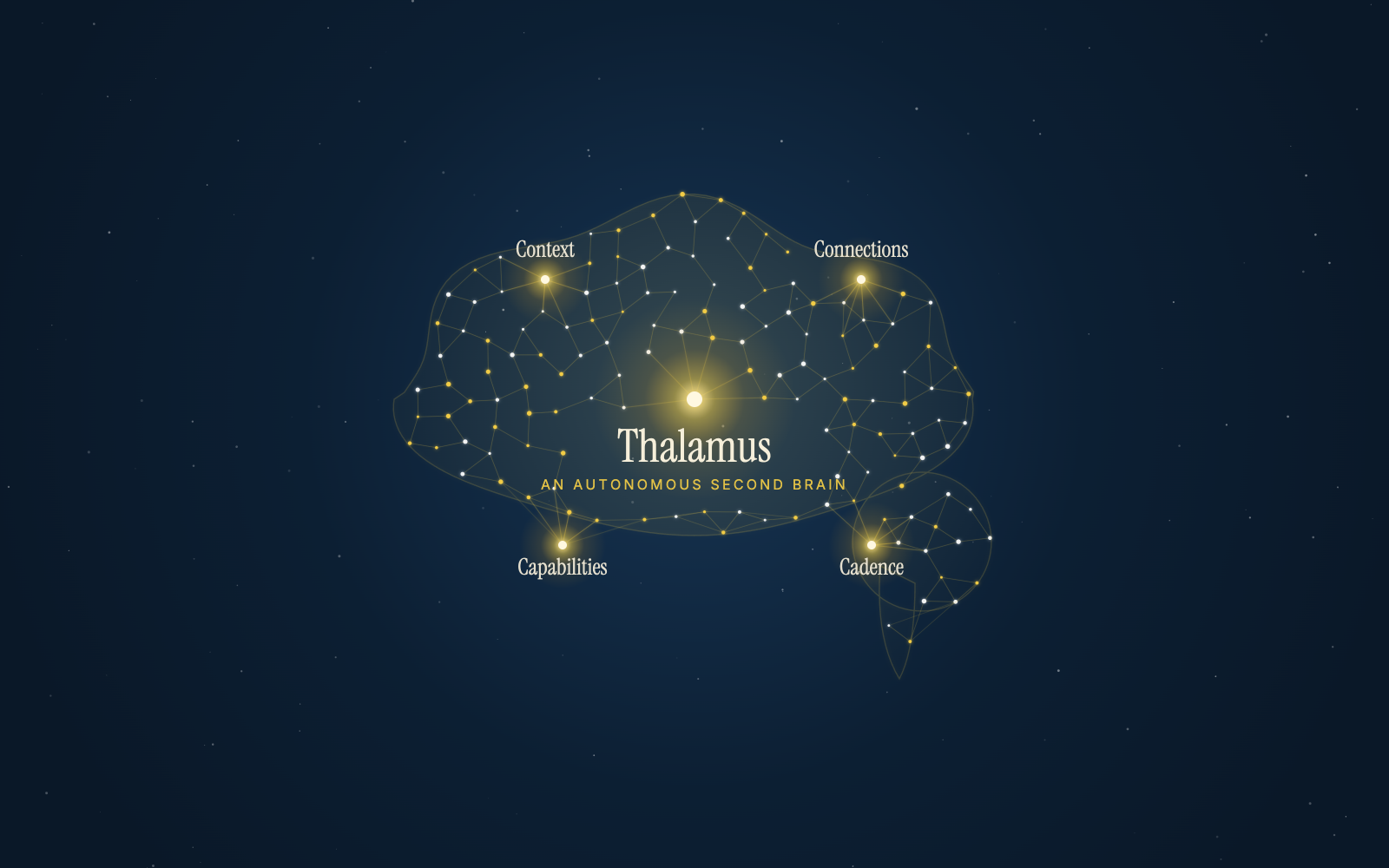
Thalamus screenshot
2026

Thalamus

Architect

I built an autonomous second brain that works like a real one, digitally, and lifts the manual work and mental load off me.

What it is
A second brain for my own work: it holds my whole world, reads my live mail and calendar, drafts in my voice, and rewrites its own instructions the moment it gets something wrong.
Who it is for
Me. It is not for sale. It is where the pattern behind Neuro came from.
What I did
Designed the architecture and wired it to my live mail, calendar, drive and notes.
What came of it
It runs my week. Every mistake it makes fixes the file that caused it, so it cannot make that one again.
The full story

Thalamus is my second brain. An autonomous system that works the way a real brain does, digitally: it holds my whole world in a structured knowledge base, reasons over it to draft and act in my voice, reads my live inbox and calendar, and rewrites its own instructions when it gets something wrong. The name is personal. The thalamus is the part of my own brain a haemorrhage struck, the part I fought my way back from. So I built a new one in code, to carry the work and the load I no longer want to carry by hand.

  • A second-brain architecture from scratch, the Four C's: Context (who I am and my work), Connections (live data), Capabilities (skills), Cadence (its rhythm), every decision reasoned through what it knows about me
  • Retrieval against a hand-curated markdown knowledge base kept as an Obsidian vault, version-controllable and human-readable, instead of a black-box vector database
  • Three live MCP integrations: Microsoft Graph (Outlook), Google Workspace (Gmail, Calendar, Drive) and Notion, each under strict scoped permissions so it can read and draft but never sends or posts on its own
  • Custom model-invokable skills, including a tone engine that captures two distinct writing registers from my real sent email, a job-application pipeline, and a task board
  • A genuine self-improvement loop: every miss fixes the source file or skill and is logged so it cannot recur, with scoped local tokens and explicit allow and deny lists
Claude CodeMCPObsidian vaultMarkdown knowledge baseSkills
0 C's
the architecture
0
live MCP integrations
0
live services it reads
We Know People screenshot
2025

We Know People

MarTech / AI Specialist

Sixteen months as the in-house AI specialist, turning LLMs into teammates and automating the operation around them.

What it is
The AI that did a recruitment agency's daily work: it watched clients' career pages for new vacancies, drafted the outreach, kept the campaigns legal, and wrote the content.
Who it is for
A Dutch recruitment agency with a network of 30,000+ professionals, and the recruiters and marketers who work there.
What I did
Sixteen months as their in-house AI specialist: built the agents and the automations, raised their reporting, and wrote the playbook they build every internal tool by.
What came of it
A vacancy radar that runs on its own, GDPR-proof contact automation, and an AI blog generator, all of it in daily use.
The full story

As the in-house MarTech and AI specialist at a Dutch recruitment agency, I built and deployed the AI agents, automations and LLM integrations that ran the marketing and recruitment operation: an autonomous vacancy radar, GDPR-proof contact automation, an AI blog generator, and the development playbook the company builds its tools by.

  • Sixteen months owning AI, automation, HubSpot and BI for a firm with a 30,000+ professional network
  • Built an autonomous vacancy radar in n8n: it watches former clients' career pages, strips and cleans the raw HTML with my own crawler, then orchestrates three LLMs (OpenAI, OpenRouter and Google Gemini via LangChain) to extract structured vacancy data and draft a personalised recruiter email in Gmail, posting to Microsoft Teams and logging to Google Sheets
  • Built GDPR-proof marketing automation: a HubSpot and Otys API sync with automatic opt-out handling and dynamic cohort segmentation, so campaigns stayed targeted and compliant with no manual list management
  • Shipped an AI blog generator: forced Gemini 2.5 Flash into typed JSON output (SEO analysis, full article and FAQ), then chained Imagen 3 for a text-free illustration and alt-text per section, with one-click export to Markdown or a Docs-ready HTML file
  • Authored the company's digital-tools development playbook, a Define, Design, Execute, Learn process built on the Double Diamond and Agile sprints, so every new internal tool shipped to a repeatable standard
n8nLangChainOpenAI / Gemini / OpenRouterHubSpot + Otys APIImagen 3
0
months owning AI & automation
0
LLMs orchestrated in one pipeline
0+
professional network
Koninklijke Marinedagen App screenshot
2022

Koninklijke Marinedagen App

Project manager, 15-person team

I shipped the Royal Navy's official event app for 100,000 visitors, on a deadline that could not move.

What it is
The official app for Navy Days: point it at a ship to see the fleet in augmented reality, scan a code for whatever you are standing in front of, find your way on a live map.
Who it is for
The Royal Netherlands Navy, as a client of DTT, the Amsterdam agency where I worked. They set the date and the date could not move.
What I did
Ran the 15-person team that delivered it, turning what the client wanted into what actually shipped, against a deadline nobody could push.
What came of it
Around 100,000 visitors used it in two days, a five-star client rating on DTT's case study, and a written testimonial from the Navy itself.
The full story

When the Royal Netherlands Navy needed an app for its first public Navy Days in five years, I ran the 15-person team at DTT that delivered it on time, with augmented reality of the fleet, QR ship info, and a live event map.

  • Led a 15-person full-stack team, translating client goals into shipped features against a fixed, unmovable event date
  • Around 100,000 visitors used it across two days at a national naval event
  • Augmented reality of the fleet plus QR scanning for ship-level information: real interactive tech, not a brochure app
  • A five-star client rating on DTT's case study, and a written testimonial from Nathalie Zwagerman of the Royal Netherlands Navy: "A fantastic result was achieved in a relatively short period of time. The application ensured that our visitors were properly informed before, during and after the Navy Days. We have come to know DTT as a reliable partner."
Project managementNative iOS + AndroidARQR
0
visitors in two days
0
person team I led
0-star
client rating from the Navy
2026
2026

Haarlem Home Sale Campaign

Go-to-market strategy & copy

I ran an apartment sale like a go-to-market campaign, not just a property listing.

What it is
An apartment sale run as a go-to-market campaign: channels ranked by real reach, outreach written in the owners' own voice, a full listing in three languages.
Who it is for
Two owners of a Haarlem new-build, and the international buyers the standard Dutch channels never reach.
What I did
Vetted every channel live, wrote the listing and the outreach in Dutch, English and Spanish, and planned a rollout that would not read as spam.
What came of it
A 545,000 euro home put in front of 9+ vetted communities, in Dutch, English and Spanish.
The full story

To reach beyond the standard Dutch buyer pool, I vetted the highest-reach expat and local housing communities by size and rules, then wrote owner-voice outreach and a full listing in three languages, with a Schiphol-commute angle and an anti-spam posting plan, to put a Haarlem new-build in front of the right international buyers.

  • Vetted each channel live and ranked by reach and relevance, from a 56,900-member expat group to active Haarlem-local and Schiphol-area communities, flagging public versus join-first groups
  • Wrote a short owner-voice note plus a full listing (price, 91 m2, A+++ energy, EV-charging parking, transport links) so it read like owners, not an ad
  • Built audience-specific angles: a commute opening line for Schiphol-area groups and a Spanish-language variant for Spanish-speaking buyers
  • Planned an anti-spam rollout, a few groups per day split between the two owners, to stay credible and avoid platform flags
Go-to-marketChannel researchAudience targetingCopywritingDutch / English / Spanish
0
Haarlem new-build listed
0+
targeted channels vetted
0
languages of the listing

Want to see who built all this? Read the story.